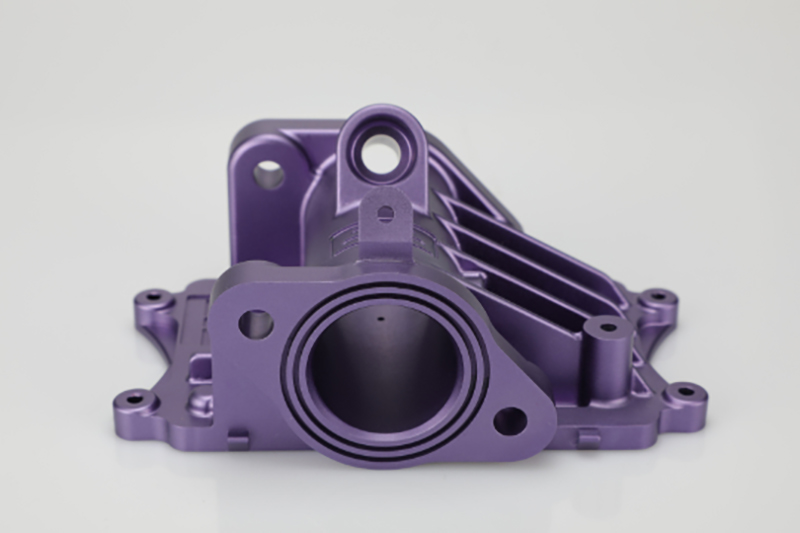
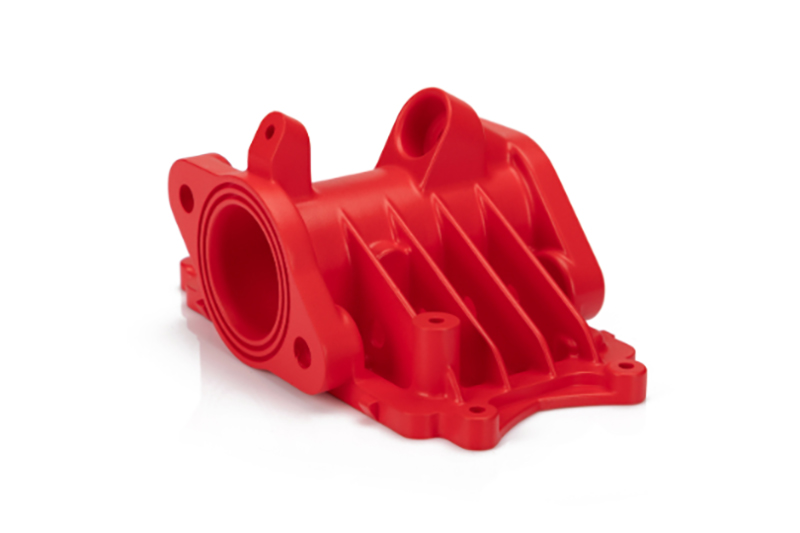
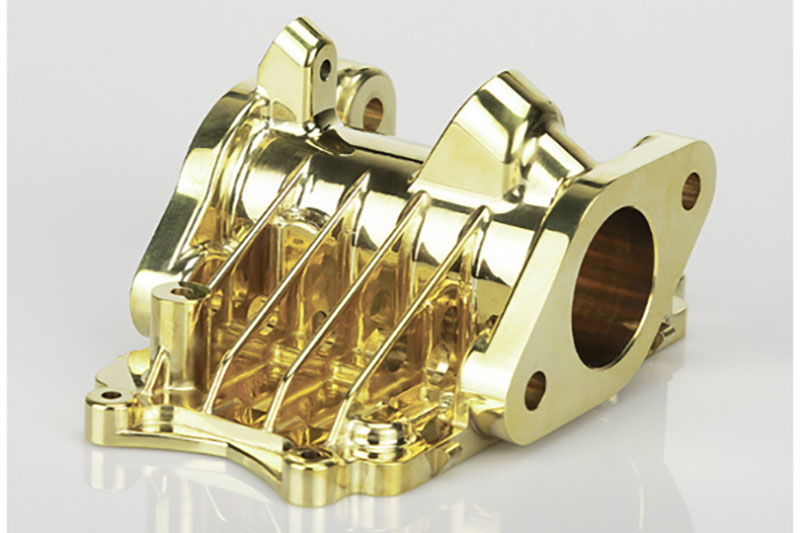
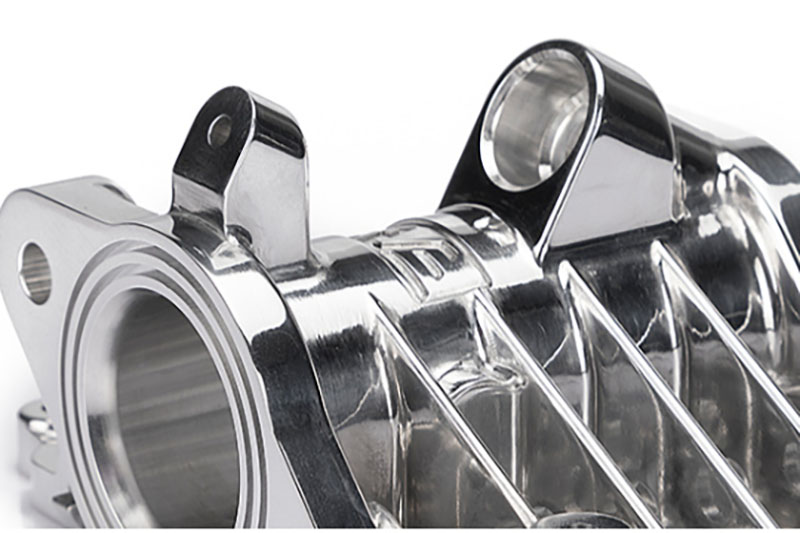
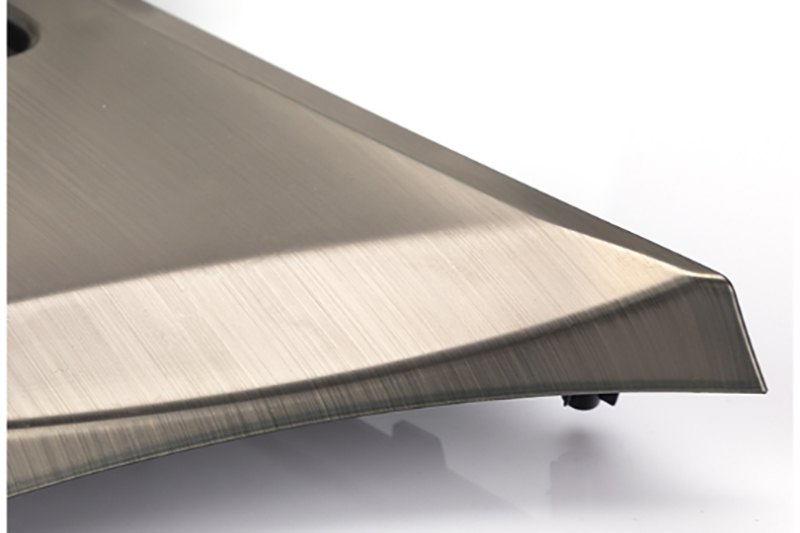
Investment cast, also known as lost-wax casting or precision casting, is a metal casting process that involves injecting molten metal into a pre-made ceramic mold. The mold is then broken apart to reveal the solidified metal part. Here are two major sorts.
Stainless steel is widely used to produce investment casting components in all industries. For more than a decade, NOBLE has been manufacturing stainless steel investment castings for businesses in a variety of industries. We take great proud in our capacity to deliver high-quality castings to the world’s most esteemed manufacturers and suppliers.
The process of aluminum investment casting manufactures industrial components by metallically replicating wax models. The term “investing,” which describes encasing a design in refractory materials, is the root of the term “investment casting.” Molten aluminum is used to manufacture components with a smooth surface finish, excellent dimensional accuracy, and fine detail free of flash or parting lines.
100% Part Inspection
Versatility and Precision
No minimum order quantity
Competitive & Affordable Price
High Casting Quality
Direct Delivery to You
High Production Efficiency
Wide Range of Raw Materials
Why Choose Us
Our Robust Investment Casting Capabilities
00
+
Machines
00
+
Experience years
000
pc
MOQ
00
+
Surface Finishes
Investment Casting Service
From Prototyping to Manufacturing
PqMold is your trusted one-stop custom manufacturing solution, from prototype design to manufacturing, through huge manufacturing resources, suitable technology, streamlined process, expert guidance, and perfect quality inspection process to turn your ideas into reality.
From PqMold, get fast and reliable manufacturing solutions with online quoting and free design analysis completed within hours. Our experienced engineering team reviews your design to optimize manufacturability, quality, and cost—so your CNC machined prototypes and production parts are delivered in just days, not weeks.
With advanced production equipment and an experienced team of engineers, we can manufacture products with complex geometric shapes and high-precision requirements under strict tolerance control and comprehensive quality inspection processes.
From material selection to final inspection and reliable product quality.
PqMold meets mass production needs through strict tolerance control, comprehensive quality inspection, and a complete supply chain, delivering cost-effective, high-precision parts quickly and reliably.
With scalable manufacturing capabilities and consistent performance from pilot runs to full-scale production.
State-of-the-art Equipment
10+ Years of CNC Machining
Competitive & Affordable Price
Quote Within 24 hours
Free DFM Feedback
Fast Turnaround in 7 days
Competitive & Affordable Price
State-of-the-art Equipment
10+ Years of Low-Volume Manufacturing
Fast Lead Time
30+ Countries shipped
100% Part Inspection
10+ Years of Medium&Mass Production
Competitive & Affordable Price
Large Supplier Network
100,0000+ Unique parts produced
Guaranteed Consistent Quality
Fast Turn-Around Production
Investment Casting Service
Why Choose Us for Custom Investment Casting Services
PqMold employs cutting-edge technology and a group of experts committed to prioritizing our clients. Our investment casting services are accurate, productive, economical, and yield excellent outcomes. By choosing our investment casting services, you can elevate your business to new levels of success.
We ensure product consistency and quality stability by producing intricate shapes and high-precision parts using state-of-the-art production technologies and equipment.
From the first consultation to the last delivery, we are dedicated to offering our clients full services. To make sure their demands are satisfied, we collaborate closely with our clients.
04
Investment Casting Service
Work with Us in 4 Simple Steps Only
With many years of manufacturing experience, PqMold offers the best solutions for all rapid prototyping and low-volume manufacturing needs. We streamline the innovation cycle into four simple but effective steps.
01
Upload Your Design
Just simply upload your CAD files and submit RFQs with clear information online.
02
Receive Design Analysis
We'll send you design for manufacturability analysis and transparent pricing.
03
Start Manufacturing
Our experts will produce your parts with the required technologies and materials.
04
Receive Your Parts
Your parts will be delivered to your door directly with stringent deadlines.
Investment Casting Service
Investment Casting Tolerances and Standards
PqMold has focused on providing custom investment casting services for over 10 years. To satisfy the demands of various industries and applications, NOBLE typically provides a variety of capabilities.
Standard
Capabilities
Casting Size (mm)
10-1000
Maximum Casting Weight (kg)
10
Minimum Wall Thickness (mm)
0.5
Tolerance (mm)
0.02
Surface Finish
Ra1.6
Tolerance
CT4-CT7
MOQ
500
Additional Services
CNC machining,Heat treatment,Surface Treatment,Assembly.Packaging, etc.
Investment Casting Service
Materials for Custom Investment Casting Parts
Various materials are available for CNC machines, giving you options for rapid prototyping and custom production runs of complex parts. We provide instant quotes on more than 150 metals and plastics for your manufacturing needs, and you can even compare prices on different processed materials.
Carbon Steel
Carbon steel is an iron-carbon alloy with a carbon content of 0.0218% to 2.11%. Generally, the higher the carbon content in carbon steel, the greater the hardness and strength, but the lower the plasticity.
Cast aluminum has the advantages of low density, high specific strength, good corrosion resistance and casting processability, and little restriction on part structure design.
Cast titanium alloy refers to titanium alloy that can be cast into a certain shape of casting. Most deformed titanium alloys have good casting properties and can be used for casting.
Carbon steel is an iron-carbon alloy with a carbon content of 0.0218% to 2.11%. Generally, the higher the carbon content in carbon steel, the greater the hardness and strength, but the lower the plasticity.
Cast aluminum has the advantages of low density, high specific strength, good corrosion resistance and casting processability, and little restriction on part structure design.
Cast titanium alloy refers to titanium alloy that can be cast into a certain shape of casting. Most deformed titanium alloys have good casting properties and can be used for casting.
PqMold can help improve the surface qualities of your products by offering a diverse range of surface finishes. Surface finishes on your customized parts aim to improve their appearance, surface hardness, and roughness, chemical and corrosion resistance, and so on. Here are some of your best options.
Anodizing
Anodizing improves corrosion resistance, enhancing wear resistance and hardness, and protecting the metal surface. Widely used in mechanical parts, aircraft, and automobile parts, precision instruments, etc.
Powder coating is a type of coating that is applied as a free-flowing, dry powder. Unlike conventional liquid paint which is delivered via an evaporating solvent, powder coating is typically applied electrostatically and then cured under heat or with ultraviolet light.
Electroplating can be functional, decorative or corrosion-related. Many industries use the process, including the automotive sector, in which chrome-plating of steel automobile parts is common.
Polishing is the process of creating a smooth and shiny surface, either through physical rubbing of the part or by chemical interference. The process produces a surface with significant specular reflection, but in some materials is able to reduce diffuse reflection.
Anodizing improves corrosion resistance, enhancing wear resistance and hardness, and protecting the metal surface. Widely used in mechanical parts, aircraft, and automobile parts, precision instruments, etc.
Powder coating is a type of coating that is applied as a free-flowing, dry powder. Unlike conventional liquid paint which is delivered via an evaporating solvent, powder coating is typically applied electrostatically and then cured under heat or with ultraviolet light.
Electroplating can be functional, decorative or corrosion-related. Many industries use the process, including the automotive sector, in which chrome-plating of steel automobile parts is common.
Polishing is the process of creating a smooth and shiny surface, either through physical rubbing of the part or by chemical interference. The process produces a surface with significant specular reflection, but in some materials is able to reduce diffuse reflection.
We manufacture OEM parts according to your drawings including processes like investment casting. Please check our customized precision investment casting parts for valued customers, from prototype design to investment casting molding.
Find answers to common questions about investment casting, including wax pattern creation, tooling design, achievable tolerances, surface quality, and suitable alloy materials. Learn how PQMold ensures precision, consistency, and reliable production for complex and high-detail metal components.
01. What is an investment casting?
Investment casting, also known as precision casting or lost wax casting, is a manufacturing process in which a wax pattern is used to shape a disposable ceramic mold. A wax pattern is made in the exact shape of the item to be cast. This pattern is coated with a refractory ceramic material.
02.How accurate is investment casting?
Investment casting is extremely accurate and near net shape. Since metal components are created by using the same wax pattern, this accuracy can be maintained from casting to casting.
03.How does the investment cast work?
The steps within the investment casting process are as follows:
Step 1: Engineering Review
Step 2: Mold Design & Build
Step 3: Wax Pattern
Step 4: Ceramic Mold Construction
Step 5: De-waxing
Step 6: Foundry & Pouring
Step 7: Shell & Casting Removal
Step 8: Finishing
04.What is the difference between die casting and investment casting?
Die casting uses reusable molds while investment casting uses disposable molds for each new cast. Die cast parts may require some post-processing to achieve desired finishes and dimensions, while investment casting generally requires little to no additional processing.
05.How long does investment casting take?
At its core, the investment casting process is simple: create a model, form a mold, and pour the metal. At most traditional precision metal foundries, you then wait anywhere from 6 to 8 weeks or more to get your part.
06.What is the size limit for investment casting?
Investment casting shells also have limitations on their size and depth. They cannot be smaller than 1.6mm or deeper than 1.5 times the diameter. If your casting design requires cores and cannot fit these requirements, you may need to seek another process.
Contact
Have a Project in Mind?
Contact With Us
If you have a project in mind, our team is ready to guide you from concept to completion with expert support and reliable engineering solutions. Reach out to us and let’s build it together.





.jpg)
.jpg)
.jpg)
.jpg)
.jpg)