Welcome Professional Custom Parts Machining and Mold Service Provider
Liquid silicone injection molding is a versatile and efficient solution for producing high-performance parts. PqMold has advanced liquid silicone injection molding equipment and an experienced team of engineers to help you optimize your design, reduce injection molding costs, and get impeccable liquid silicone injection molded parts at competitive prices.The following are our powerful liquid silicone injection molding services
PqMold is your trusted one-stop custom manufacturing solution, from prototype design to manufacturing, through huge manufacturing resources, suitable technology, streamlined process, expert guidance, and perfect quality inspection process to turn your ideas into reality.
PqMold is dedicated to provide customized insert molding solutions from design to production. Our professional team quickly responds to your requirements.We provide competitive prices and strict standard production lines for high quality parts.
With many years of manufacturing experience, PqMold offers the best solutions for all rapid prototyping and low-volume manufacturing needs. We streamline the innovation cycle into four simple but effective steps.CNC Machining Services
Just simply upload your CAD files and submit RFQs with clear information online.
We'll send you design for manufacturability analysis and transparent pricing.
Our experts will produce your parts with the required technologies and materials.
Your parts will be delivered to your door directly with stringent deadlines.
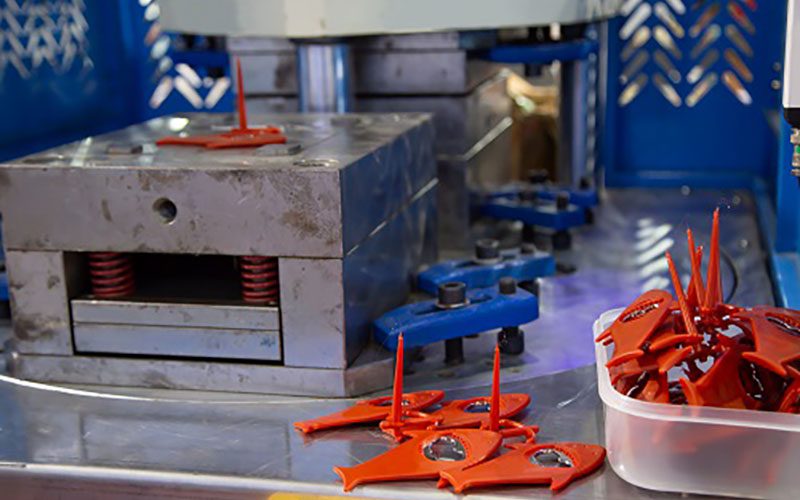
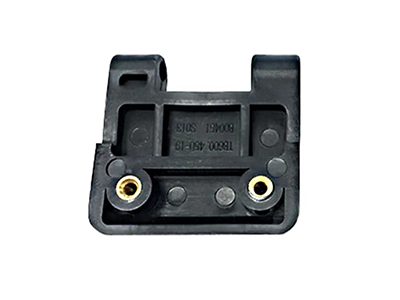
Insert molding is a process that injecting plastic materials around another part so that forms a new part. As usual, the material of the inserted component could be plastic or metal. In the insert molding process, the insert is placed in the mold in advance, and then the machinist will inject plastic (thermoplastic resin is the common material) into the cavity. When cooled, parts are about to be packaged and delivered to customers.
For your convenience and to solve your problem more efficiently, refer to the following information to improve part manufacturability and reduce lead times. Let’s unlock the potential of your insert molding project.
| Standards | Metric Units | Imperial Units |
| Maximum Part Size | 800×1000×400mm | 31.50×39.37×15.75in. |
| Minimum Part Size | 2×2×2mm | 0. 08×0. 08×0. 08in. |
| Substrate Wall Thickness | From 0. 5 to 3mm | From 0. 20 to 0. 12 in. |
| Tolerance | +/- 0. 025 mm | +/- 0. 00098 in. |
| Inserts | Inserts can be female and male. They both can improve a product’s appearance and utility. | |
| Mold Validation | Provide T0, T1, T2 samples before mass production | |
| Inspection and Certification Options | First Article Inspection, ISO 9001, ISO13485 | |
| Lead Time | From mold making to sample delivery: 15-45 business days | |
Advanced injection molding machines ensure up-to-date and available insert molding options. A range of materials are supported to support your custom requirements in various fields. There are some common materials:
Before injection molding process starts low or high-volume production, a high tolerance CNC machined tooling is needed. Most commonly used materials include:
| Tool Steel: | P20, H13, S7, NAK80, S136, S136H, 718, 718H, 738 |
| Stainless Steel: | 420, NAK80, S136, 316L, 316, 301, 303, 304 |
| Aluminum: | 6061, 5052, 7075 |
Plastic injection molding service comes with a wide range of materials with different properties, including impact strength, rigidity, thermal resistance, chemical resistance, etc.
| ABS | Nylon (PA) | PC | PVC |
| PU | PMMA | PP | PEEK |
| PE | HDPE | PS | POM |
Standard plastic materials may not meet custom injection molding parts requirement. In this case, additives and fibers can be added to improve aesthetic and functional properties, providing additional features for your injection molded parts.
| UV | absorbers | Colorants |
| Flame | retardants | Glass fibers |
| Plasticizers |
The insert is put into the mold and then closed the mold. Plastic pellets will be plasticized. After the plastic has cured, the part is ejected from the mold, and the insert will be sealed into the part.
| Brass |
| Stainless Steel |
| Aluminum |
Before injection molding process starts low or high-volume production, a high tolerance CNC machined tooling is needed. Most commonly used materials include:
| Tool Steel: | P20, H13, S7, NAK80, S136, S136H, 718, 718H, 738 |
| Stainless Steel: | 420, NAK80, S136, 316L, 316, 301, 303, 304 |
| Aluminum: | 6061, 5052, 7075 |
Plastic injection molding service comes with a wide range of materials with different properties, including impact strength, rigidity, thermal resistance, chemical resistance, etc.
| ABS | Nylon (PA) | PC | PVC |
| PU | PMMA | PP | PEEK |
| PE | HDPE | PS | POM |
Standard plastic materials may not meet custom injection molding parts requirement. In this case, additives and fibers can be added to improve aesthetic and functional properties, providing additional features for your injection molded parts.
| UV | absorbers | Colorants |
| Flame | retardants | Glass fibers |
| Plasticizers |
The insert is put into the mold and then closed the mold. Plastic pellets will be plasticized. After the plastic has cured, the part is ejected from the mold, and the insert will be sealed into the part.
| Brass |
| Stainless Steel |
| Aluminum |
Surface finishing is also be used to improve the part’s function and aesthetics. Common surface finishing is supported for your choice:
A grade finishes are made using a diamond buffing process and yield shiny and glossy surfaces on injection molded parts.
B grade finishes use grit sandpaper to produce parts with a slightly rougher finish than grade A parts. Custom molded plastic parts that undergo B grade finishing have a matte surface texture.
C grade finishes use grit sanding stones to produce a rough, uneven surface. Injection plastic parts that undergo C grade finishing have a matte surface texture.
D grade finishes use grit and dry glass beads or oxide to produce a very rough textured finish. Depending on the type of material used, products can have a satin or dull finish.
A grade finishes are made using a diamond buffing process and yield shiny and glossy surfaces on injection molded parts.
B grade finishes use grit sandpaper to produce parts with a slightly rougher finish than grade A parts. Custom molded plastic parts that undergo B grade finishing have a matte surface texture.
C grade finishes use grit sanding stones to produce a rough, uneven surface. Injection plastic parts that undergo C grade finishing have a matte surface texture.
D grade finishes use grit and dry glass beads or oxide to produce a very rough textured finish. Depending on the type of material used, products can have a satin or dull finish.
Our custom insert molded parts are designed to enhance performance and durability. Check out our precision custom insert molded parts, including our valued customers’ precision parts.
Since injection molding can achieve high precision at good manufacturing speeds without changing the material’s structure, it is becoming more familiar with the ever-expanding range of machines, control systems, and tools used for injection molding. PqMold is committed to providing precision machining services for all walks of life, our injection-molded precision parts are found in all walks of life, including.
In general, most moldable thermoplastic resins are compatible with the insert molding process. Usually, the insert is made of metal, usually brass, aluminum, or stainless steel.
Insert molding is a manufacturing process that involves molding a plastic or metal insert into a plastic part during the molding process. Here is a summary of how insert molding works:
1.A metal or plastic insert is placed into the mold cavity before the plastic material is injected. The insert is positioned in a specific location and held in place by the mold.
2.The mold is closed and the plastic material is injected into the cavity. The plastic material flows around the insert and fills the mold cavity, bonding with the insert and forming a composite part.
3.Once the plastic has cooled and solidified, the mold is opened and the finished part is removed.
Designing an insert molding involves several considerations to ensure that the final product meets the desired performance and aesthetic requirements. Here are some key steps to designing an insert molding:
Define the part requirements:Identify the functional, aesthetic, and performance requirements of the part, including the material properties, dimensional tolerances, surface finish, and assembly requirements.
Choose the insert material:Select the appropriate insert material based on the part requirements, such as the strength, stiffness, conductivity, and compatibility with the molding process and the plastic material.
Determine the insert geometry:Define the shape, size, and location of the insert in relation to the plastic part, taking into account the mold design, the injection molding process, and the assembly requirements.
Design the mold:Create a mold design that incorporates the insert and allows for proper plastic flow and bonding with the insert. The mold design should consider the molding process, the material properties, and the part geometry.
Optimize the molding process:Determine the appropriate molding parameters, such as the temperature, pressure, and cooling time, to ensure proper bonding between the insert and the plastic material. The molding process should be optimized to prevent defects, such as sink marks, voids, and warpage.
Test and validate the design:Perform testing and validation to ensure that the part meets the desired performance and aesthetic requirements, including dimensional accuracy, mechanical properties, and assembly fit.
Refine the design:Incorporate any necessary design changes based on the testing and validation results, and repeat the testing and validation process as needed.
Insert molding and overmolding are both plastic molding processes that involve molding one material over another to create a composite part. However, there are several differences between these two processes, including:
The placement of the insert material:In insert molding, the insert material is placed into the mold cavity before the plastic material is injected, whereas in overmolding, the plastic material is molded over the substrate material after it has been formed.
The purpose of the process:Insert molding is typically used to add strength, functionality, or aesthetics to the part, whereas overmolding is used to create a soft-touch grip, improve ergonomics, or add color or texture to the part.
The materials used:Insert molding typically involves metal or plastic inserts that are molded into a plastic part, whereas overmolding involves a variety of plastic materials that are molded over a substrate material.
The molding process:Insert molding can be performed using various molding processes, such as injection molding, compression molding, and transfer molding, whereas overmolding is typically performed using injection molding.

Insert molding is the process of molding or forming plastic parts around other non-plastic parts or inserts. The biggest difference between insert molding and overmolding is that overmolding involves two injections of material to form the substrate, while insert molding involves only one injection of molten plastic.
Here is a summary of how to insert molding works:
1.A metal or plastic insert is placed into the mold cavity before the plastic material is injected. The insert is positioned in a specific location and held in place by the mold.
2.The mold is closed and the plastic material is injected into the cavity. The plastic material flows around the insert and fills the mold cavity, bonding with the insert and forming a composite part.
3.Once the plastic has cooled and solidified, the mold is opened and the finished part is removed.
If you have a project in mind, our team is ready to guide you from concept to completion with expert support and reliable engineering solutions. Reach out to us and let’s build it together.
İKİTELLİ OSB MAH. DEMİRCİLER SİTESİ
Interested in working with us?
info@pqmold.com
Mon-Fri: 08:00 - 17:00 Sat-Sun: Closed
Have questions or need support? Fill out the form below and our team will get back to you as soon as possible with the assistance you need.