Welcome Professional Custom Parts Machining and Mold Service Provider
PqMold is your trusted one-stop custom manufacturing solution, from prototype design to manufacturing, through huge manufacturing resources, suitable technology, streamlined process, expert guidance, and perfect quality inspection process to turn your ideas into reality.
When considering custom thermoforming services, selecting the right provider is crucial for ensuring quality, efficiency, and satisfaction. Here are several compelling reasons why you should choose us.
With many years of manufacturing experience, PqMold offers the best solutions for all rapid prototyping and low-volume manufacturing needs. We streamline the innovation cycle into four simple but effective steps.CNC Machining Services
Just simply upload your CAD files and submit RFQs with clear information online.
We'll send you design for manufacturability analysis and transparent pricing.
Our experts will produce your parts with the required technologies and materials.
Your parts will be delivered to your door directly with stringent deadlines.
Thermoforming is a manufacturing process in which a plastic sheet is heated until it becomes soft and pliable, then shaped over a mold to form a specific design. Once the plastic takes the shape of the mold, it is cooled and trimmed to create the final product. This process is widely used because it is cost-effective, fast, and suitable for both small and large-scale production.
There are two main types of thermoforming: vacuum forming and pressure forming. In vacuum forming, the heated plastic sheet is stretched over a mold and a vacuum is applied to suck the sheet tightly against the mold surface. Pressure forming is similar, but additional air pressure is used to create more precise and detailed shapes.
Thermoforming is commonly used in industries such as packaging, automotive, and consumer goods. Examples include disposable cups, trays, automotive interior panels, and protective packaging. Materials used in thermoforming include ABS, polystyrene, polyethylene, and polycarbonate, among others.
The advantages of thermoforming include low tooling costs, flexibility in design changes, and fast production cycles. However, it is generally less suitable for highly complex or very small detailed parts compared to injection molding. Overall, thermoforming is an efficient and versatile technique for producing lightweight and durable plastic components.
Thermoforming works by heating a plastic sheet until it becomes soft and flexible. The softened sheet is then stretched over or into a mold to take its shape. Depending on the method, either a vacuum, air pressure, or mechanical force is used to press the plastic tightly against the mold. Once the sheet conforms to the mold, it is cooled so that it hardens and retains the desired shape.
The process begins with sheet preparation, where the plastic is cut to the correct size. Then, the sheet is heated evenly to the required temperature. Next, the forming stage shapes the plastic over the mold, followed by cooling, which ensures the part maintains its form. Finally, the trimming stage removes excess material to create a finished product.
Thermoforming is ideal for producing lightweight, durable, and cost-effective parts, such as packaging, trays, automotive panels, and consumer goods. Its flexibility allows quick design changes and fast production cycles.
The thermoforming process is widely used for creating various products, from packaging to automotive components. Understanding tolerances and standards in thermoforming is crucial for ensuring product quality and functionality.
| ACTIVITY | TOLERANCE | GUIDELINE |
FORMED MEASUREMENTS <6″ 6″-12″ 12″-18′ >18″ | +/-0.015″ +/-0.025″ +/-0.030″ +/-0.030″ +/-0.002″per inch | Tolerance and size increase proportionally |
| DRILLED HOLE DIAMETERS | +/-0.005″ | Holes Equal or Lesser than 1″ |
| DRILLED HOLE DIAMETERS | +/-0.010″ | Holes from 1″ to 5″ |
| SLOTS | +/-0.010″ | Slot Equal to or Lesser than 1″ Any Direction |
| SLOTS | +/-0.020″ | Slots Greater than 1″ |
| 5 AXIS TRIM | +/-0.015″ | Trim Features under 5″ |
| 5 AXIS TRIM | +/-0.020″ | Trim Features Greater than 5″ |
Thermoforming is applied to produce food packages, aircraft components, toys, pallets, and other plastic items. Hence, manufacturers must consider a diverse range of plastic materials before production. Here are the commonly used materials for thermoforming.
The most often used plastic for thermoforming is PP. It is frequently utilized in the production of toys, ventilators, packaging, and other plastic products. The inherent qualities of polypropylene, such as its superior resilience to heat, fatigue, and chemicals, make it useful.
PET offers excellent chemical resistance, a high degree of impact resistance, tensile strength, and very good alcohol and essential oil barrier qualities. It is frequently used for water bottles, carbonated drinks, and a variety of culinary items.
HDPE is renowned for its resistance to water, chemicals, and ultraviolet light. It is a strong thermoplastic that can be used to make plastic bags, pipes, containers, blown bottles, and packaging film.
Polycarbonates are strong, tough materials that can undergo large plastic deformations without cracking or breaking. They have high electrical insulating qualities and are resistant to heat and flame.
The most often used plastic for thermoforming is PP. It is frequently utilized in the production of toys, ventilators, packaging, and other plastic products. The inherent qualities of polypropylene, such as its superior resilience to heat, fatigue, and chemicals, make it useful.
PET offers excellent chemical resistance, a high degree of impact resistance, tensile strength, and very good alcohol and essential oil barrier qualities. It is frequently used for water bottles, carbonated drinks, and a variety of culinary items.
HDPE is renowned for its resistance to water, chemicals, and ultraviolet light. It is a strong thermoplastic that can be used to make plastic bags, pipes, containers, blown bottles, and packaging film.
Polycarbonates are strong, tough materials that can undergo large plastic deformations without cracking or breaking. They have high electrical insulating qualities and are resistant to heat and flame.
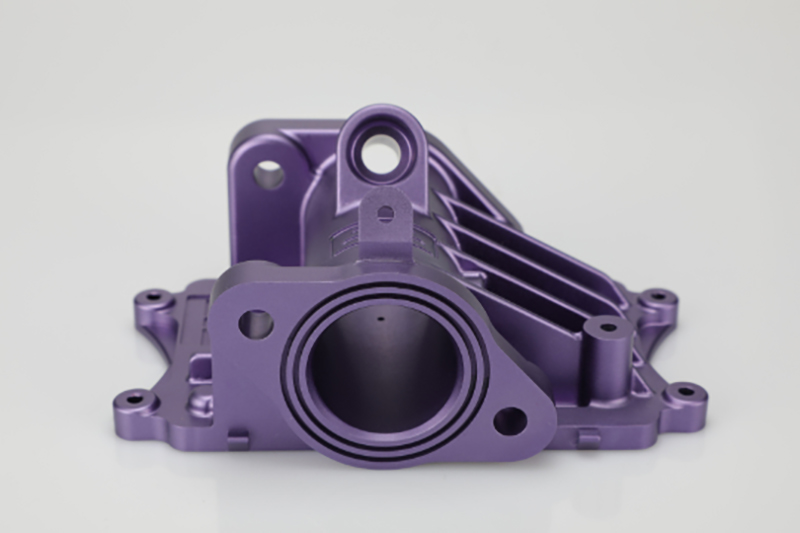
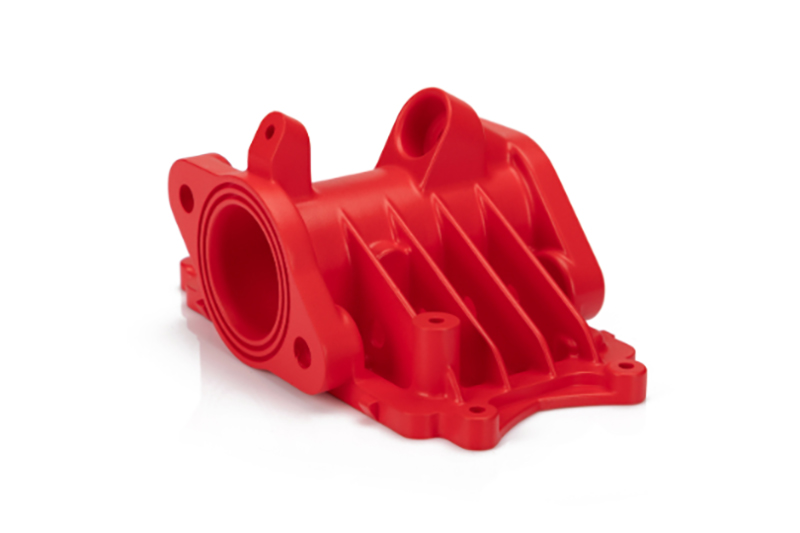
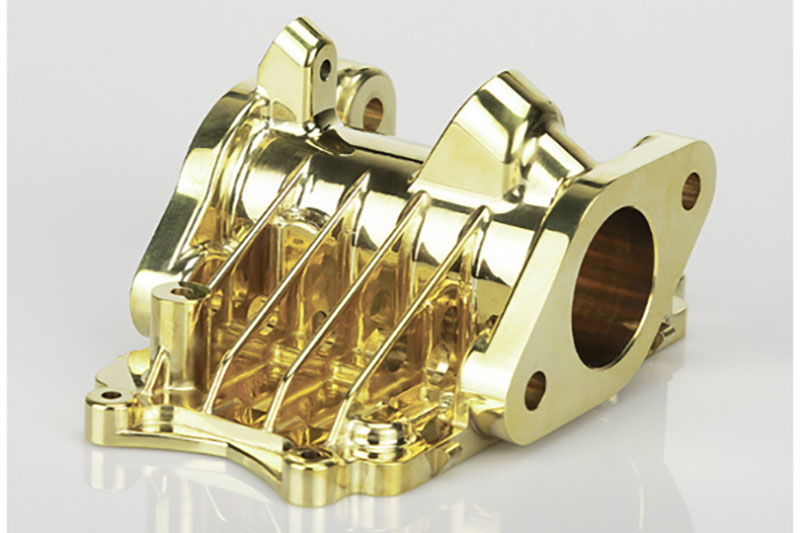
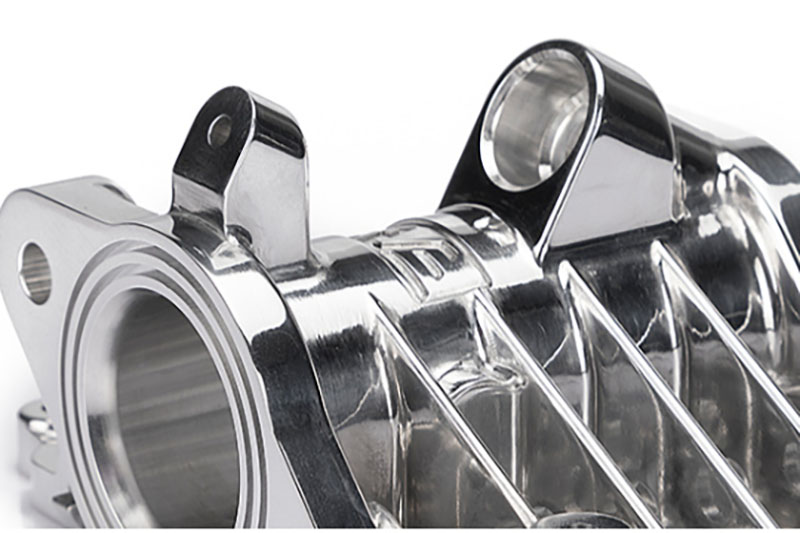
CNC machining leaves visible tool marks during the process of removing portions of the block’s surface to create desired shapes. If you don’t want as-machined parts, select a surface finishing for your custom parts. At PqMold, we offer several common surface finishes that help improve functionality and aesthetics.
Anodizing improves corrosion resistance, enhancing wear resistance and hardness, and protecting the metal surface. Widely used in mechanical parts, aircraft, and automobile parts, precision instruments, etc.
Powder coating is a type of coating that is applied as a free-flowing, dry powder. Unlike conventional liquid paint which is delivered via an evaporating solvent, powder coating is typically applied electrostatically and then cured under heat or with ultraviolet light.
Electroplating can be functional, decorative or corrosion-related. Many industries use the process, including the automotive sector, in which chrome-plating of steel automobile parts is common.
Polishing is the process of creating a smooth and shiny surface, either through physical rubbing of the part or by chemical interference. The process produces a surface with significant specular reflection, but in some materials is able to reduce diffuse reflection.
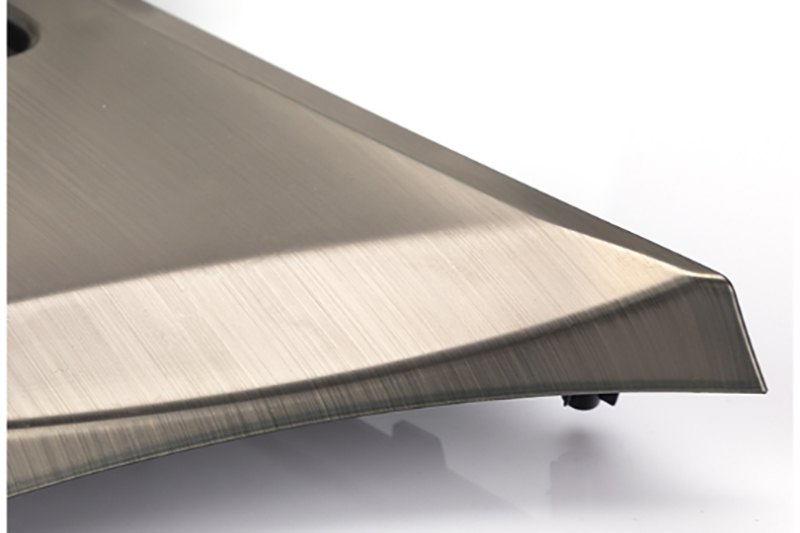
Brushing is a surface treatment process in which abrasive belts are used to draw traces on the surface of a material, usually for aesthetic purposes.
Anodizing improves corrosion resistance, enhancing wear resistance and hardness, and protecting the metal surface. Widely used in mechanical parts, aircraft, and automobile parts, precision instruments, etc.
Powder coating is a type of coating that is applied as a free-flowing, dry powder. Unlike conventional liquid paint which is delivered via an evaporating solvent, powder coating is typically applied electrostatically and then cured under heat or with ultraviolet light.
Electroplating can be functional, decorative or corrosion-related. Many industries use the process, including the automotive sector, in which chrome-plating of steel automobile parts is common.
Polishing is the process of creating a smooth and shiny surface, either through physical rubbing of the part or by chemical interference. The process produces a surface with significant specular reflection, but in some materials is able to reduce diffuse reflection.
Brushing is a surface treatment process in which abrasive belts are used to draw traces on the surface of a material, usually for aesthetic purposes.
Please take a look at our customized precision thermoforming parts for valued customers, from prototype design to thermoforming molding, to obtain impeccable surface treatment and stable performance of thermoforming parts at competitive prices.
Since injection molding can achieve high precision at good manufacturing speeds without changing the material’s structure, it is becoming more familiar with the ever-expanding range of machines, control systems, and tools used for injection molding. PqMold is committed to providing precision machining services for all walks of life, our injection-molded precision parts are found in all walks of life, including.
The process uses a thermoforming machine to heat and stretch the pliable thermoplastic sheet over the mold. Modern thermoforming machines are generally equipped to handle the trimming and cutting process, while for more conventional machines, trimming and cooling may be done externally.
Thermoforming stands out for its remarkable cost-effectiveness in various ways. Firstly, it boasts low tooling costs, making it accessible to businesses of all sizes. Additionally, thermoforming is highly material-efficient, reducing waste and contributing to sustainability.

Thermoforming is a manufacturing process where a plastic sheet is heated to a pliable forming temperature, formed to a specific shape in a mold, and trimmed to create a usable product.
There are multiple types of thermoforming processes but the two most popular, include vacuum forming and pressure forming (we also provide drape forming services and more). Both types are very similar in process, but they each have advantages and disadvantages.
Extrusion creates product continuously through the constant rotation of the resin compressing screw. The process uses a die that molten plastic is pushed through to create a specific shape and thickness. Thermoforming is a manufacturing process by which a plastic sheet is heated until it can bend.
If you have a project in mind, our team is ready to guide you from concept to completion with expert support and reliable engineering solutions. Reach out to us and let’s build it together.
İKİTELLİ OSB MAH. DEMİRCİLER SİTESİ
Interested in working with us?
info@pqmold.com
Mon-Fri: 08:00 - 17:00 Sat-Sun: Closed
Have questions or need support? Fill out the form below and our team will get back to you as soon as possible with the assistance you need.