Welcome Professional Custom Parts Machining and Mold Service Provider
CNC Turning Services uses CNC lathes to machine materials (metals and plastics) into various shapes and sizes with high precision, producing quality CNC turning parts for industries such as automotive, aerospace, medical devices, electronics, etc. PqMold customizes CNC lathe machining services for you at competitive prices, from prototyping to manufacturing, so you can get quality CNC lathe machined parts quickly.
PqMold is your trusted one-stop custom manufacturing solution, from prototype design to manufacturing, through huge manufacturing resources, suitable technology, streamlined process, expert guidance, and perfect quality inspection process to turn your ideas into reality.
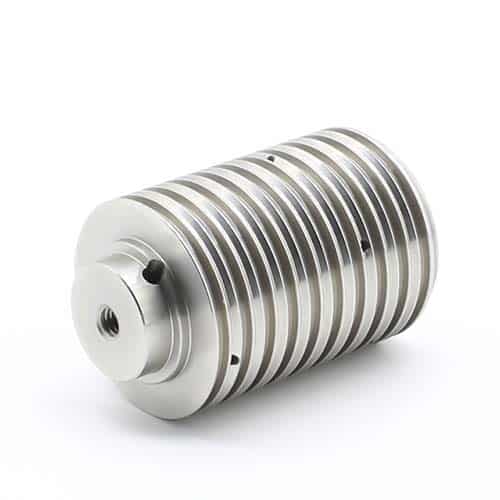
CNC turning (also known as CNC lathes) is a subtractive manufacturing process in which a stationary cutting tool removes material by making contact with the spinning workpiece to create the desired shape.CNC Turning Services
During processing, a blank bar of stock material is held in the chuck of the spindle and rotated with the spindle. Extreme precision and repeatability can be achieved under the control of computer instructions for the movement of the machinery.
When CNC turning rotates the workpiece in a chuck, it’ s generally to create round or tubular shapes and achieve far more accurate rounded surfaces than CNC milling or other machining processes. To know more about the difference between CNC milling and CNC turning, this link may be valuable for you.
PqMold is a leading CNC lathe parts machining service company in China, always providing highly reliable CNC lathe parts machining service for multiple industries. Our CNC lathe parts machining technology method helps customers solve complex parts machining problems to meet customers’ various needs.
With many years of manufacturing experience, PqMold offers the best solutions for all rapid prototyping and low-volume manufacturing needs. We streamline the innovation cycle into four simple but effective steps.CNC Turning Services
Just simply upload your CAD files and submit RFQs with clear information online.
We'll send you design for manufacturability analysis and transparent pricing.
Our experts will produce your parts with the required technologies and materials.
Your parts will be delivered to your door directly with stringent deadlines.
With precision CNC machining services, PqMold is your ideal partner to create precision machined prototypes and parts. Our standard CNC machining tolerances for metals is ISO 2768-f and for plastics is ISO 2768-m. We can also achieve special tolerances as long as you indicate your requirements for your drawing.
| Type | CNC Turning Tolerance |
| Linear dimension | ±0.025 mm-±0.001 inch |
| Hole diameters | ±0.025 mm-±0.001 inch |
| Shaft diameters | ±0.025 mm-±0.001 inch |
| Part size limit | 950 * 550 * 480 mm-37.0 * 21.5 * 18.5 inch |
Our CNC turning processes are compatible with a wide range of materials, including machine-grade metals and plastics. Depending on your applications, we can create precise rapid prototypes and low-volume production from various superior-quality materials. Check out some of the common materials for your CNC turning projects.
Aluminum is a highly ductile metal, making it easy to machining. The material has a good strength-to-weight ratio and is available in many types for a range of applications.
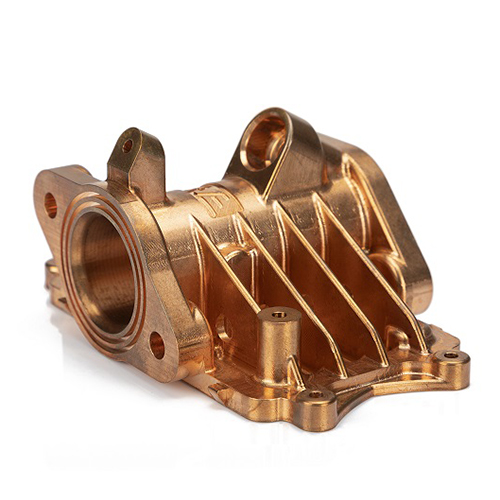
Copper displays excellent thermal conductivity, electrical conductivity and plasticity. It is also highly ductile, corrosion resistant and can be easily welded.
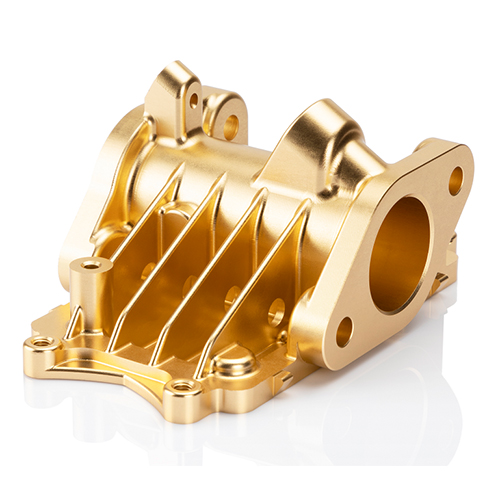
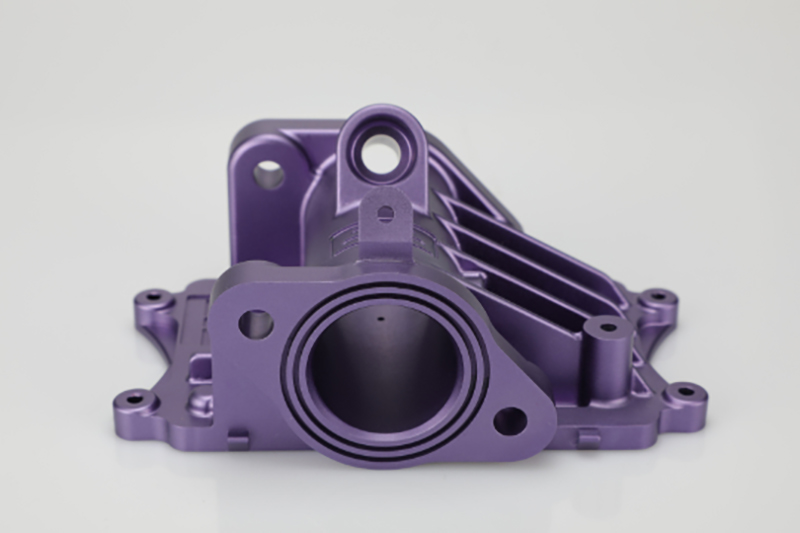
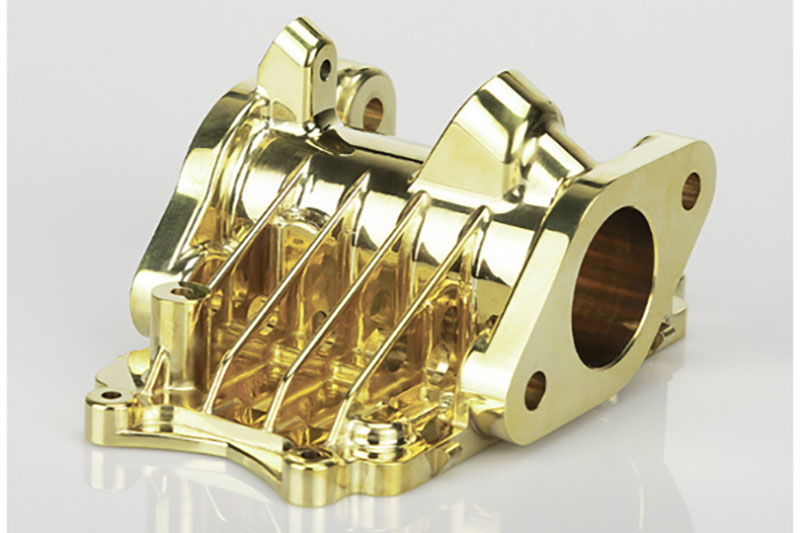
Brass has desirable properties for a number of applications. It is low friction, has excellent electrical conductivity and has a golden (brass) appearance.
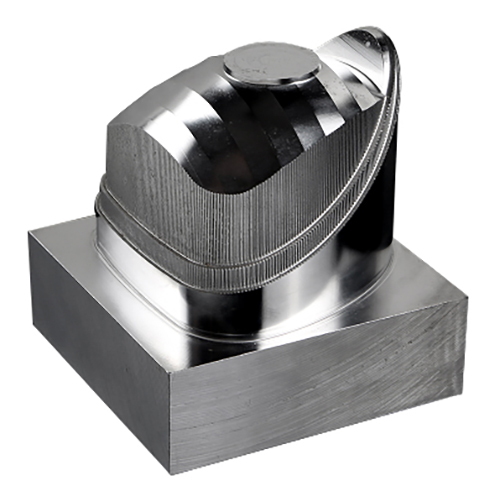
Stainless steel is the low carbon steel that offers many properties that are sought after for industrial applications. Stainless steel typically contains a minimum of 10% chromium by weight.
Titanium has a number of material properties that make it the ideal metal for demanding applications. These properties include excellent resistance to corrosion, chemicals and extreme temperatures. The metal also has an excellent strength-to-weight ratio.
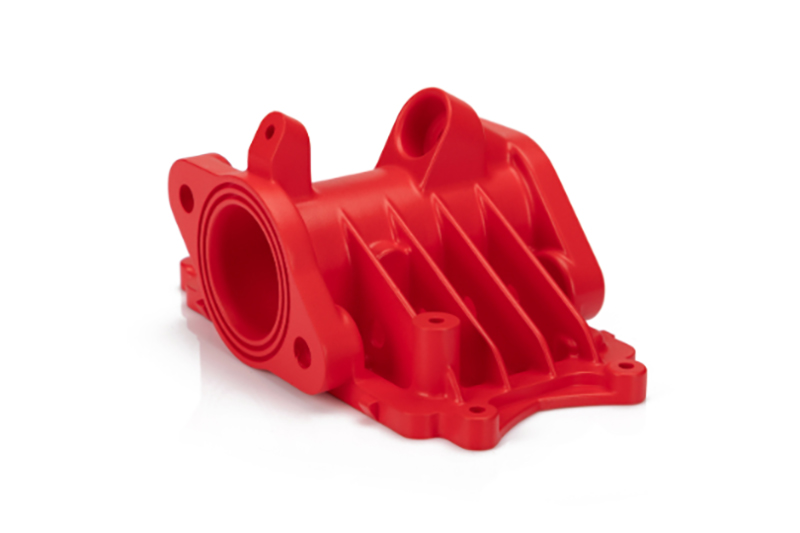
Plastics are also a very popular option for CNC machining because of its wide choices, relatively lower price, and significantly faster machining time needed. We provide all common plastics for CNC machining services.
Magnesium is a silver-white metal with a density of 1.74 g/cm3. Its characteristics are small density, good ductility, high strength, large elastic modulus, good heat dissipation, good shock absorption, greater impact load capacity than aluminum alloy, and good corrosion resistance to organic substances and alkalis.
Aluminum is a highly ductile metal, making it easy to machining. The material has a good strength-to-weight ratio and is available in many types for a range of applications.
Copper displays excellent thermal conductivity, electrical conductivity and plasticity. It is also highly ductile, corrosion resistant and can be easily welded.
Brass has desirable properties for a number of applications. It is low friction, has excellent electrical conductivity and has a golden (brass) appearance.
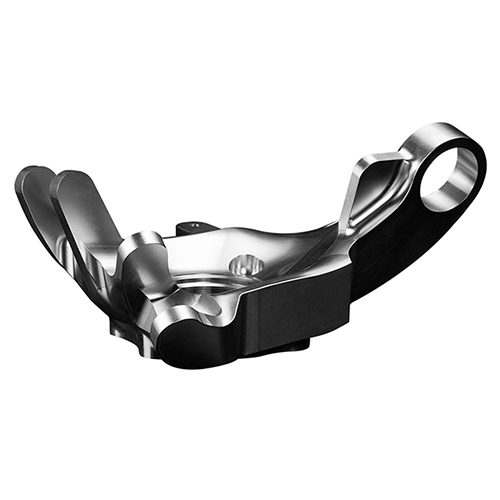
Stainless steel is the low carbon steel that offers many properties that are sought after for industrial applications. Stainless steel typically contains a minimum of 10% chromium by weight.
Titanium has a number of material properties that make it the ideal metal for demanding applications. These properties include excellent resistance to corrosion, chemicals and extreme temperatures. The metal also has an excellent strength-to-weight ratio.
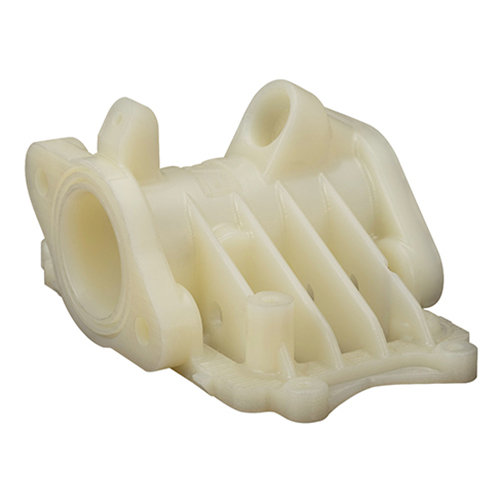
Plastics are also a very popular option for CNC machining because of its wide choices, relatively lower price, and significantly faster machining time needed. We provide all common plastics for CNC machining services.
Magnesium is a silver-white metal with a density of 1.74 g/cm3. Its characteristics are small density, good ductility, high strength, large elastic modulus, good heat dissipation, good shock absorption, greater impact load capacity than aluminum alloy, and good corrosion resistance to organic substances and alkalis.
CNC machining leaves visible tool marks during the process of removing portions of the block’s surface to create desired shapes. If you don’t want as-machined parts, select a surface finishing for your custom parts. At PqMold, we offer several common surface finishes that help improve functionality and aesthetics.
Anodizing improves corrosion resistance, enhancing wear resistance and hardness, and protecting the metal surface. Widely used in mechanical parts, aircraft, and automobile parts, precision instruments, etc.
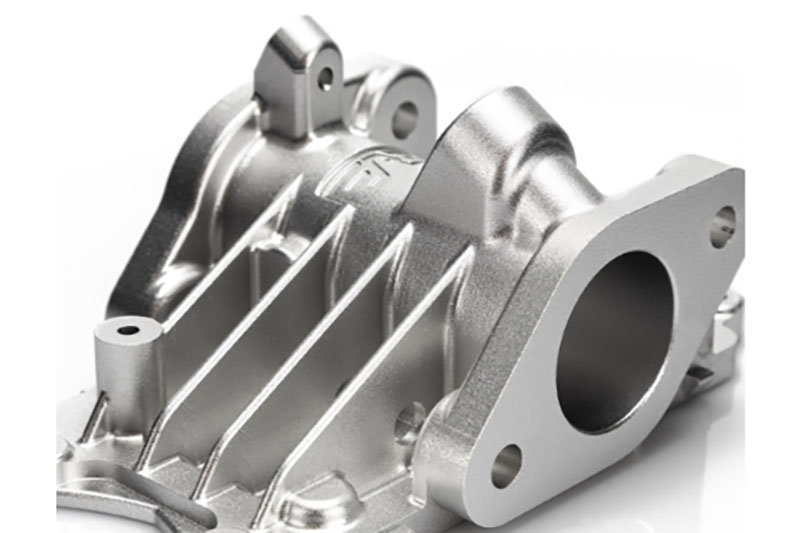
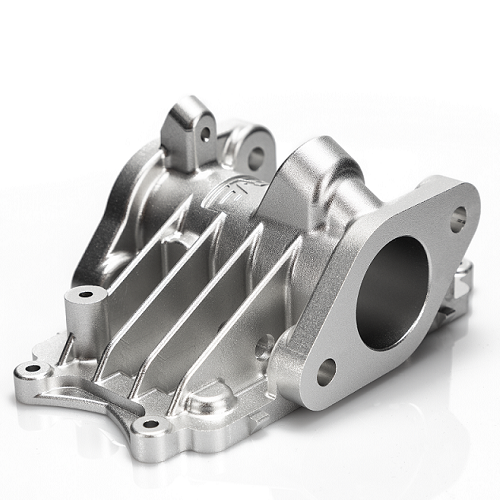
Sand blasting results in parts with a smooth surface with a matte texture. Used mainly for visual applications and can be followed by other surface treatments.
Powder coating is a type of coating that is applied as a free-flowing, dry powder. Unlike conventional liquid paint which is delivered via an evaporating solvent, powder coating is typically applied electrostatically and then cured under heat or with ultraviolet light.
Electroplating can be functional, decorative or corrosion-related. Many industries use the process, including the automotive sector, in which chrome-plating of steel automobile parts is common.
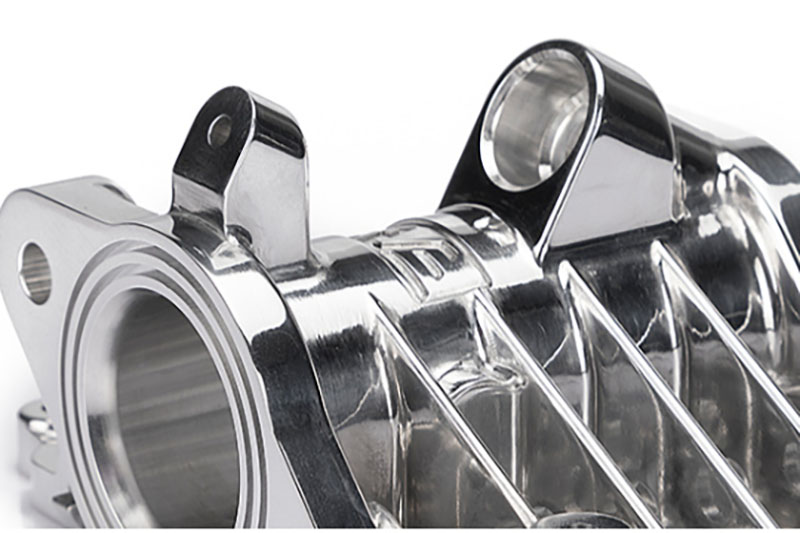
Polishing is the process of creating a smooth and shiny surface, either through physical rubbing of the part or by chemical interference. The process produces a surface with significant specular reflection, but in some materials is able to reduce diffuse reflection.
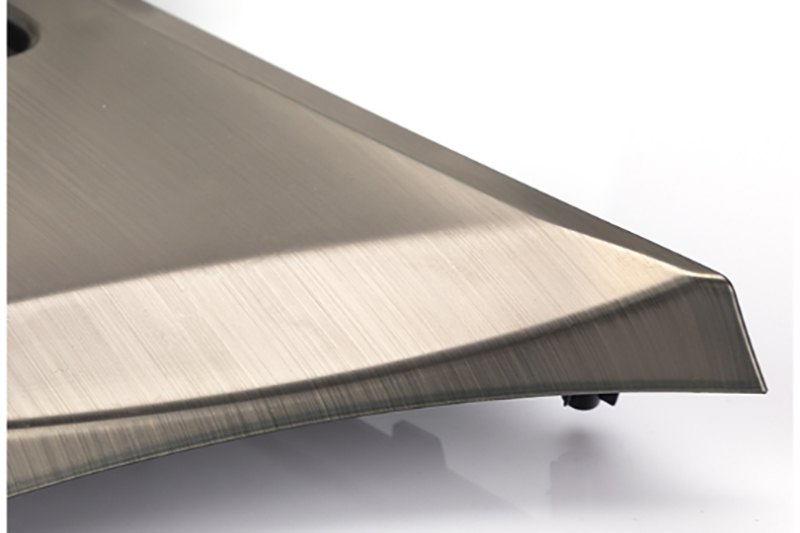
Brushing is a surface treatment process in which abrasive belts are used to draw traces on the surface of a material, usually for aesthetic purposes.
Anodizing improves corrosion resistance, enhancing wear resistance and hardness, and protecting the metal surface. Widely used in mechanical parts, aircraft, and automobile parts, precision instruments, etc.
Sand blasting results in parts with a smooth surface with a matte texture. Used mainly for visual applications and can be followed by other surface treatments.
Powder coating is a type of coating that is applied as a free-flowing, dry powder. Unlike conventional liquid paint which is delivered via an evaporating solvent, powder coating is typically applied electrostatically and then cured under heat or with ultraviolet light.
Electroplating can be functional, decorative or corrosion-related. Many industries use the process, including the automotive sector, in which chrome-plating of steel automobile parts is common.
Polishing is the process of creating a smooth and shiny surface, either through physical rubbing of the part or by chemical interference. The process produces a surface with significant specular reflection, but in some materials is able to reduce diffuse reflection.
Brushing is a surface treatment process in which abrasive belts are used to draw traces on the surface of a material, usually for aesthetic purposes.
Check out our over a decade of precision custom CNC turning parts, including precision CNC turning prototypes and parts from our valued customers.
Find clear and practical answers to the most common questions about our CNC machining services. This section covers materials, tolerances, lead times, quality control, and production capabilities to help you quickly understand our processes and make informed decisions for your projects.
CNC turning is a particular form of precision machining in which a cutter removes material by making contact with the spinning workpiece. The movement of the machinery is controlled by computer instructions, allowing for extreme precision and repeatability.
Turning is different to CNC milling, in which the cutting tool rotates and is directed from multiple angles at the workpiece, which is usually stationary. Because CNC turning involves rotating the workpiece in a chuck, it is generally used to create round or tubular shapes, achieving far more accurate rounded surfaces than would be possible with CNC milling or other processes.
The tooling that is used with a CNC lathe machine is mounted to a turret. This component is programmed to make certain movements and remove material from raw materials until the desired 3D model is formed.
Like CNC milling, CNC turning can be used for the rapid manufacture of either prototypes or end-use part.
CNC turning is a method for making symmetrical cylindrical parts. Typical examples are shafts, gears, knobs, tubes, etc. CNC turned parts are usually applied to various applications and industries like aerospace, medical, automotive, and other industries.
Rough CNC turning brings the workpiece close to the desired shape by removing as much material as possible without focusing on precision and surface finish, while finish CNC turning produces the required accuracy and smoothness.
CNC lathes are usually two-axis machines with only one spindle. Their production capacity is not high, and there is usually no protective casing around the machine. A CNC turning center is a more advanced version of a CNC lathe, with up to 5 axes and a more general cutting capacity. They also provide the ability to produce larger volumes, often integrating milling, drilling, and other functions.
The CNC turning process is mostly ideal for cylindrical-shaped raw materials. However, several manufacturers also use it for hexagonal and square-shaped workpieces. It is a popular method for making machine parts for microfluidic tools, signage components, surgical instruments, automotive frames, and aerospace parts.
We can turn parts with diameters ranging from 0.5mm to 65mm for stock bars. Our turning capabilities can reach up to 3000 mm for billets.
The best way to reduce machining time is to design features that can be machined quickly, for instance, choosing the correct radii for internal corners, reducing cavity depth, increasing wall thicknesses, limiting thread length, and designing holes with standard sizes.
Material costs can be reduced by considering the size of the blank required, and the cost and machinability of the bulk material (softer alloys are faster to machine).
Start-up costs can be reduced by reducing the number of part rotations or repositioning required to finish the part, for example, separating geometries into multiple parts that can be assembled later.
Feature costs can be reduced by only using tolerances when strictly necessary, removing all text & lettering, and avoiding multiple surface finishes.
Yes, our CNC turning services include plastic parts manufacturing. We can produce small or large batch prototypes and production parts from various engineering-grade plastics. Choose from our extensive range of plastic materials and upload your design file to get custom plastic components.
We possess a comprehensive, standardized inspection report with every order to ensure quality metrics are being met, and offer a first-article inspection service on orders of 100+ units. We also have multiple certifications available on request, including but not limited to ISO9001 and ISO13485.
The major difference between CNC milling and CNC lathe is in their machining process. CNC milling involves rotating the cutting tools against a stationary bar stock or workpiece. In contrast, a CNC lather works by rotating the bar stock or workpiece against a stationary tool. CNC milling is more suitable for machining irregular and flat surfaces, while CNC lathes work best for cylindrical or conical parts.
CNC machining is widely used across a wide range of industries. It is common in aerospace, automotive, consumer electronics, robotics, agriculture, and other fields that frequently use metal parts. It is also widely used in medical devices, household goods, energy, oil and gas, and other consumer applications. It is one of the most common processing methods in the manufacturing field.
NOBLE has offered ultra-precision CNC-crafted components for global industries including oil and gas CNC machining, medical instruments CNC machining, optical CNC machining, tool and die parts CNC machining, motorcycle components CNC machining, electronic enclosures CNC machining, automotive parts CNC machining, etc.
PqMold has offered ultra-precision CNC-crafted components for global industries including oil and gas CNC machining, medical instruments CNC machining, optical CNC machining, tool and die parts CNC machining, motorcycle components CNC machining, electronic enclosures CNC machining, automotive parts CNC machining, etc.
PqMold can accommodate prototyping and production of large machined parts, plastic or metal. The maximum size of our single piece is 2000mm, and the single-piece proofing can reach hundreds of thousands of batch processing and production.
We can provide critical tolerance according to your actual demand. For CNC machining, we manufacture metal parts as per ISO 2768-m and plastic parts as per ISO 2768-c. Please note that the higher tolerance needed, the cost will be higher.
If you have a project in mind, our team is ready to guide you from concept to completion with expert support and reliable engineering solutions. Reach out to us and let’s build it together.
İKİTELLİ OSB MAH. DEMİRCİLER SİTESİ
Interested in working with us?
info@pqmold.com
Mon-Fri: 08:00 - 17:00 Sat-Sun: Closed
Have questions or need support? Fill out the form below and our team will get back to you as soon as possible with the assistance you need.